
Furnace Tilting cylinder
Smooth, controlled tilting for safe and precise pouring.
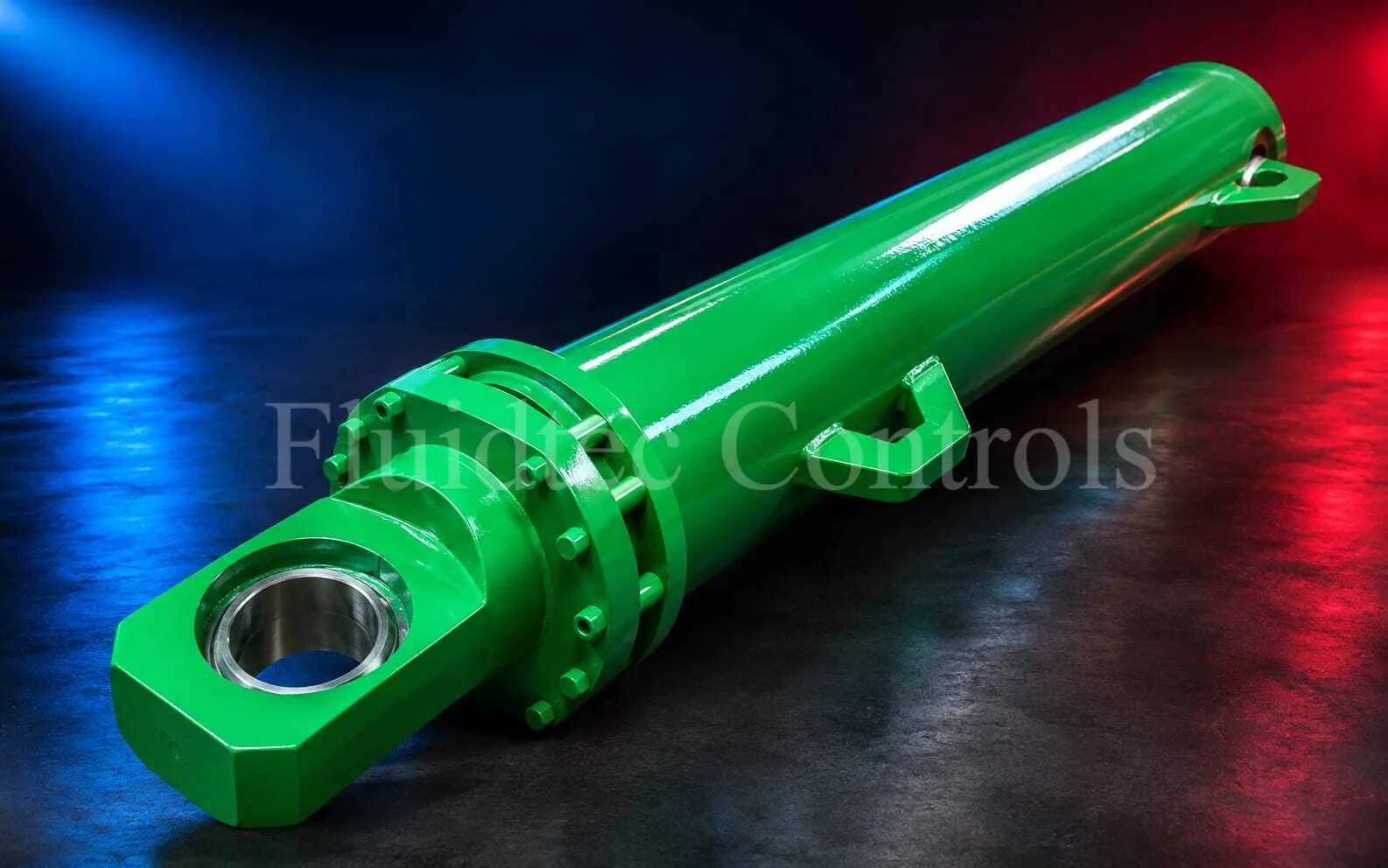
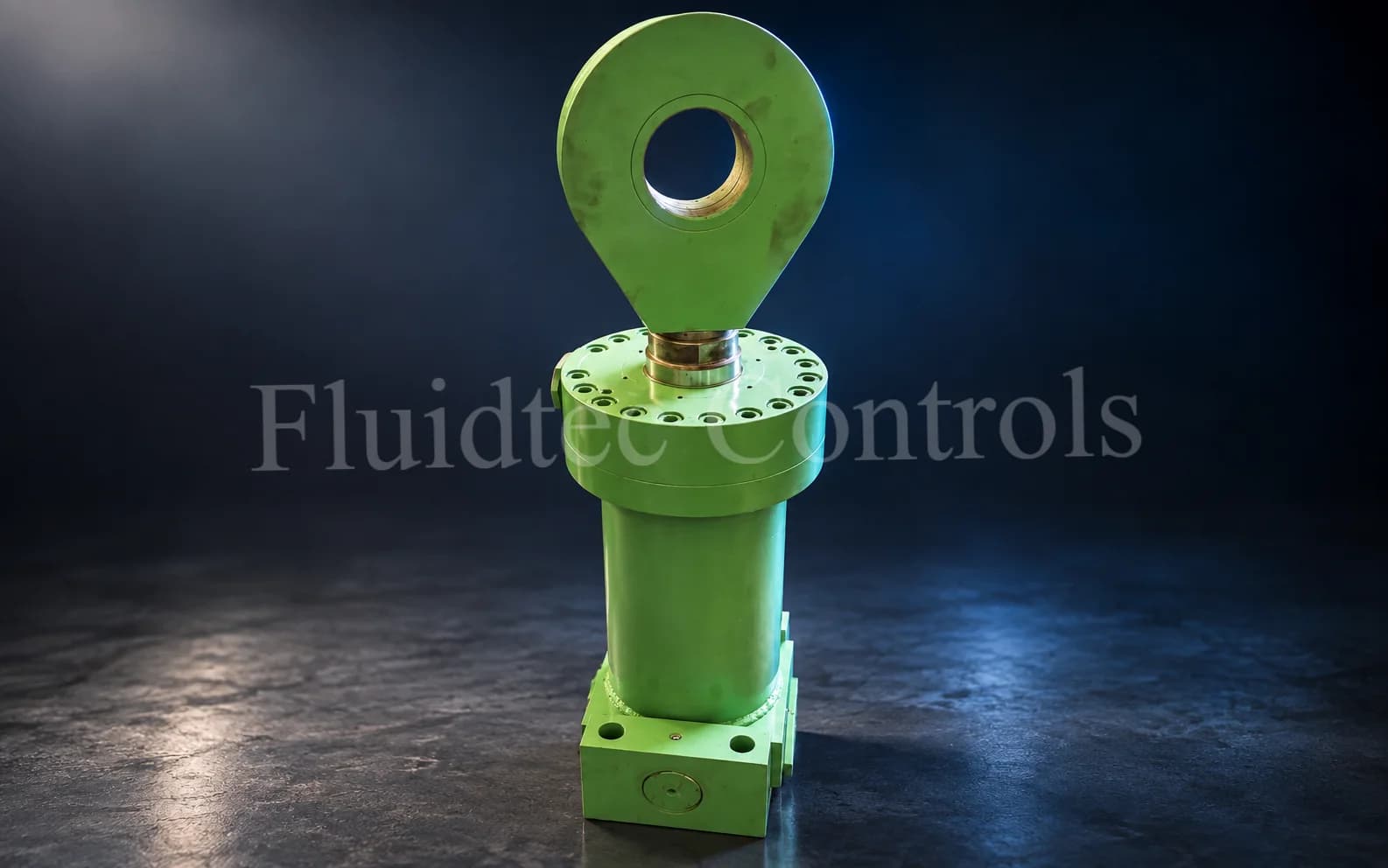
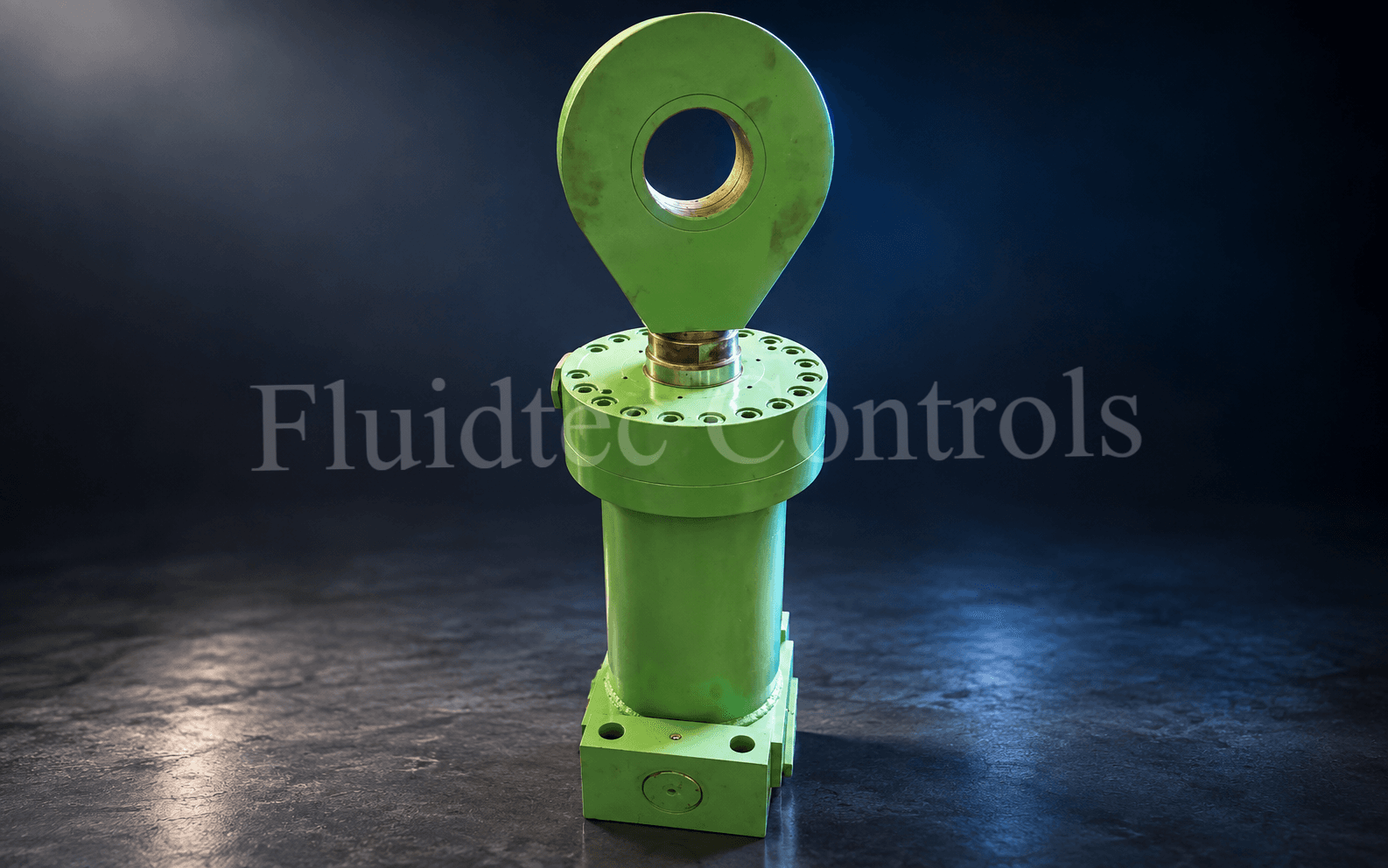
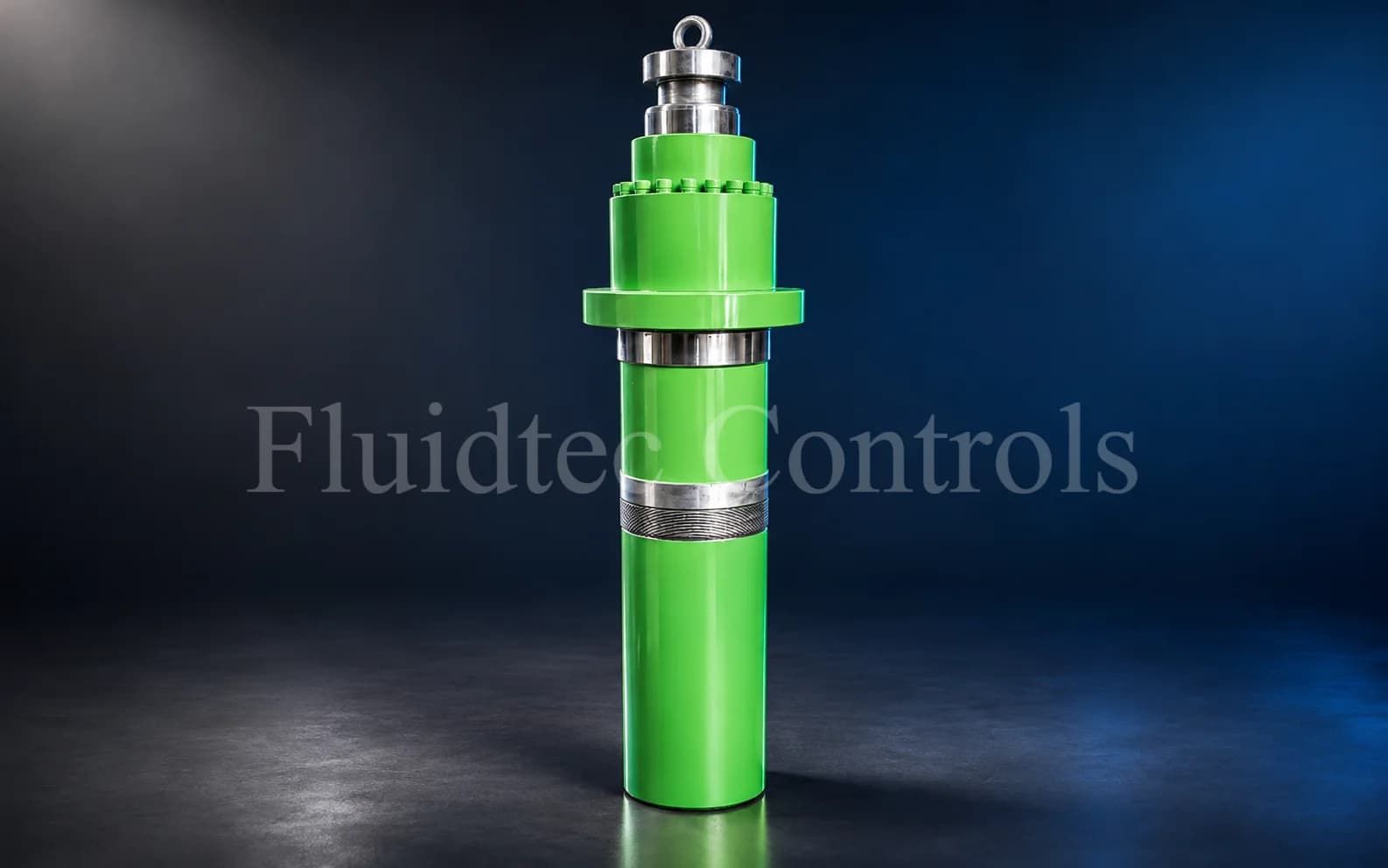
Designed for induction and melting furnaces, this heavy-duty cylinder tilts the furnace body smoothly and steadily so molten metal can be poured with precise, controlled motion. With a 230 mm bore working at 250 bar, it produces around 106 tons of push force to tilt a fully charged furnace. The welded body, bolted front gland and spherical bearing rod eye are built for the demanding conditions of a working melt shop, and the spherical bearing takes up the misalignment that occurs as the furnace swings on its pivots. Furnaces are commonly tilted by a pair of cylinders, one on each side, and each cylinder is made to suit your furnace's mounting points, stroke and tilt angle.
Key features
- Smooth, steady tilting for precise, controlled pouring
- 230 mm bore at 250 bar: around 106 tons of push force
- Spherical bearing rod eye takes up misalignment as the furnace pivots
- Heavy-duty welded body with bolted front gland for easier servicing
- Hard-chrome plated piston rod with wiper seal to keep out dust and scale
- Lifting lugs on the barrel for safe handling and installation
Typical applications
- Induction furnace tilting
- Foundries & melt shops
- Steel and non-ferrous metal plants
- Ladle and crucible tilting
- Heavy tilting & pivoting mechanisms
Specifications
Standard range shown below — every unit is configured to your exact drawing on request.
| Bore diameter | 230 mm |
| Rated working pressure | 250 bar (3,600 psi) |
| Push force | Approx. 106 TON at 250 bar (theoretical) |
| Stroke length | To suit furnace tilt angle |
| Cylinder action | Single or double acting, to suit the tilting circuit |
| Proof pressure | 1.2× rated (test certified) |
| Construction | Welded body, bolted front gland |
| Mounting styles | Pivot eyes at both ends, spherical bearing at rod end |
| Seal material | PTFE / Viton, high-temp option |
| Rod finish | Hard chrome, 0.4–0.8 µm Ra |
More hydraulic cylinders
Have a spec sheet or a problem to solve?
Send us your drawing, duty cycle or a description of the process — our engineering team will get back with a configuration and a quote.